
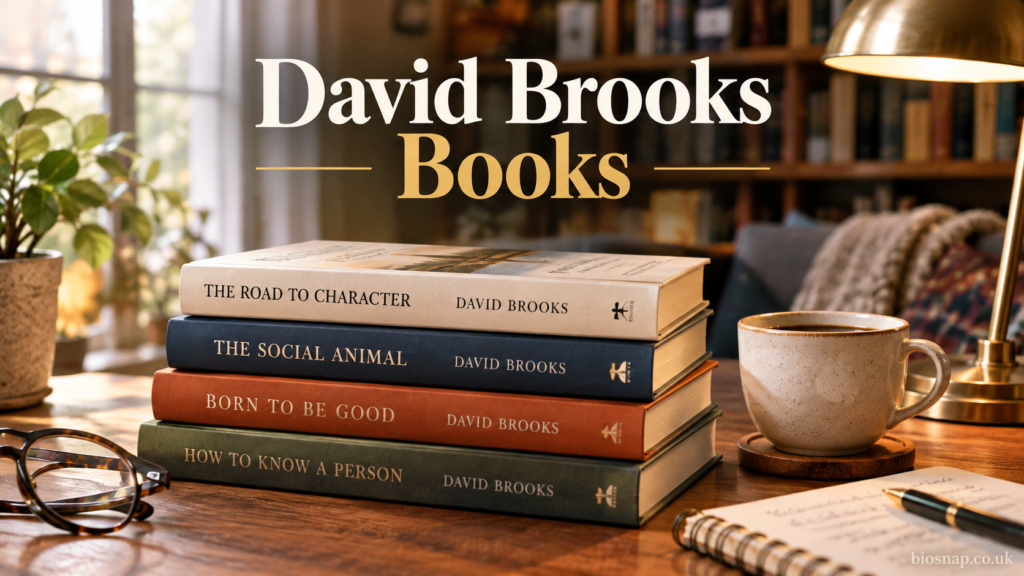

David Brooks is one of the most recognized writers in America today, known for his thoughtful books on culture, psychology, and personal meaning. Over the past two decades, he has written several bestselling nonfiction books that explore how people build character, find purpose, and connect with others in a fast-changing world. His writing blends journalism, science, and storytelling in a way that feels both intelligent and easy to understand. This article looks closely at his life, his major books, and the ideas that connect them, giving readers a simple and complete picture of why his work continues to matter.
Who Is David Brooks?
David Brooks was born in Toronto, Canada, in 1961 and later became an American citizen. He began his career as a police reporter in Chicago before moving into political and cultural commentary. He worked for many years at the Wall Street Journal and then became a well-known columnist for The New York Times, writing there for more than twenty years. In 2026, he moved his column to The Atlantic, where he continues to write about politics, society, and human behavior.
Alongside his journalism, Brooks has taught at respected universities, including Yale and the University of Chicago. He has received many honorary degrees and is part of the American Academy of Arts and Sciences. This mix of real-world reporting and academic teaching gives his books a strong sense of credibility. He does not just share opinions; he backs his ideas with research, history, and years of observation, which is why readers and critics often describe his work as trustworthy and well informed.
Brooks has also had personal experiences, including a divorce and a period of loneliness, which later shaped some of his writing. This personal honesty adds another layer of depth to his books, making them feel more human and less like distant academic writing.
Bobos in Paradise – His Debut Book
Brooks published his first major book, Bobos in Paradise, in the year 2000. In this book, he introduced the idea of the “Bobo,” a person who mixes bohemian values from the 1960s with modern business ambition. He used this term to describe a new upper class that valued creativity and individuality while still chasing wealth and status.
The book explains how this new class shaped American culture, from the coffee shops people visit to the way they decorate their homes and choose their careers. Brooks used humor and sharp observation to describe this group without harsh judgment, which made the book both entertaining and insightful.
Even today, Bobos in Paradise is seen as an important cultural study. It helped readers understand how lifestyle, taste, and success became connected in modern society, and it laid the foundation for many of the ideas Brooks would explore later in his career.
On Paradise Drive – Looking at the American Dream
In 2004, Brooks released his second book, On Paradise Drive. This book focused on suburban life in America and the country’s constant focus on the future. He argued that Americans are shaped less by their past and more by their hope for what is coming next. This idea, he said, could be seen in everything from housing design to shopping habits and travel patterns.
The book is less widely discussed than his later work, but it remains meaningful because it shows the early stages of his thinking about identity and ambition. It also reflects his skill in noticing small cultural details and turning them into larger observations about society.
Readers who enjoy cultural writing paired with wit and close observation often find this book a rewarding read, even though it did not become as famous as his later titles.
The Social Animal – Understanding Human Behavior
Published in 2011, The Social Animal marked a shift in Brooks’ writing style. Instead of only offering cultural commentary, he created two fictional characters, Harold and Erica, and followed their lives from childhood to old age. Through their story, he explained real scientific research about the brain, emotions, and relationships.
The book argues that unconscious feelings, early experiences, and social connections shape a person’s life far more than logical thinking alone. Brooks used this fictional approach to make complex ideas from psychology and neuroscience easier to understand for everyday readers.
This book became a major bestseller and is often recommended to people interested in human behavior, parenting, or emotional growth. It showed that Brooks was moving toward deeper questions about identity and connection, setting the stage for his most personal books.
The Road to Character – Building Inner Virtue
The Road to Character, published in 2015, is one of Brooks’ most respected and widely read books. In it, he separates two types of qualities: “resume virtues,” which are the skills that help build a career, and “eulogy virtues,” which are the deeper traits like kindness, humility, and honesty that people are remembered for after they pass away.
To explain these ideas, Brooks studies the lives of well-known historical figures, including Dwight Eisenhower and Dorothy Day. He shows how these individuals built strong character through personal struggle, discipline, and self-reflection rather than easy success.
This book became a number-one bestseller and struck a chord with readers who felt that modern life focuses too much on achievement and not enough on inner growth. Many readers describe this book as life-changing because it encourages a shift away from constant self-promotion toward quiet, lasting virtue.
The Second Mountain – Finding Deeper Meaning
Released in 2019, The Second Mountain explores what happens after people reach personal success. Brooks explains that many people spend their young adulthood climbing a “first mountain” built around career, money, and personal achievement. However, once they reach the top, they often feel empty or unsatisfied.
He suggests that real happiness comes from climbing a “second mountain,” one built on deep commitments such as marriage, community, faith, and meaningful work. This book was partly inspired by his own life, including a difficult period after his divorce, which gives the writing a personal and honest tone.
The book blends memoir with social commentary, and it argues that modern society often values freedom and independence too much, while ignoring the importance of long-term commitment. It remains one of his most discussed books because it speaks directly to people searching for deeper purpose in life.
How to Know a Person – His Latest Bestseller
In 2023, Brooks published How to Know a Person, which focuses on communication and human connection. In this book, he shares simple, practical ways to understand other people more deeply, such as asking better questions, listening without judgment, and noticing when someone is struggling emotionally.
This book responds to growing concerns about loneliness and disconnection in modern life, especially as more communication happens through screens rather than face-to-face conversation. Unlike some of his earlier, more philosophical books, this one offers clear, everyday techniques that readers can apply immediately.
Since its release, this book has become one of Brooks’ most talked-about titles, especially among readers interested in emotional intelligence, empathy, and improving personal relationships in a busy, distracted world.
Common Themes in David Brooks’ Books
Even though David Brooks has written about many different topics, certain ideas appear again and again throughout his books. One major theme is the balance between personal ambition and community responsibility. From his early cultural writing to his most recent work, he often questions whether modern life focuses too much on individual success and not enough on relationships and shared values.
Another common theme is the idea that meaning comes from commitment rather than unlimited freedom. Whether he is writing about marriage, career, or faith, Brooks consistently argues that choosing to commit to something larger than oneself leads to a more satisfying life than constantly chasing personal freedom.
Finally, his books combine real research with storytelling. This mix of science, history, and personal narrative is part of what makes his writing easy to follow, even when the topics are complex. It allows readers to connect emotionally with ideas that might otherwise feel distant or academic.
Conclusion
David Brooks has built a long and thoughtful career writing about culture, character, and human connection. From his early cultural observations in Bobos in Paradise to his recent focus on relationships in How to Know a Person, his books show a clear pattern of growth and curiosity. He constantly asks what it means to live a good life, whether through personal virtue, meaningful commitment, or genuine human connection.
You May Also Read: Fort Stewart



Pingback: LeBron James: Full NBA Career, Stats, Records & Legacy 2026